Byron Chrysovergis · · 4 min read
Curiosity beats the algorithm
AI will probably become better than humans at everything, apart from being human. But what defines a human? Unpredictability is one part of such a definition. The fact that we do not know what appears next in our consciousness. Unpredictability is our last resort against the algorithms. Curiosity beats the algorithm.
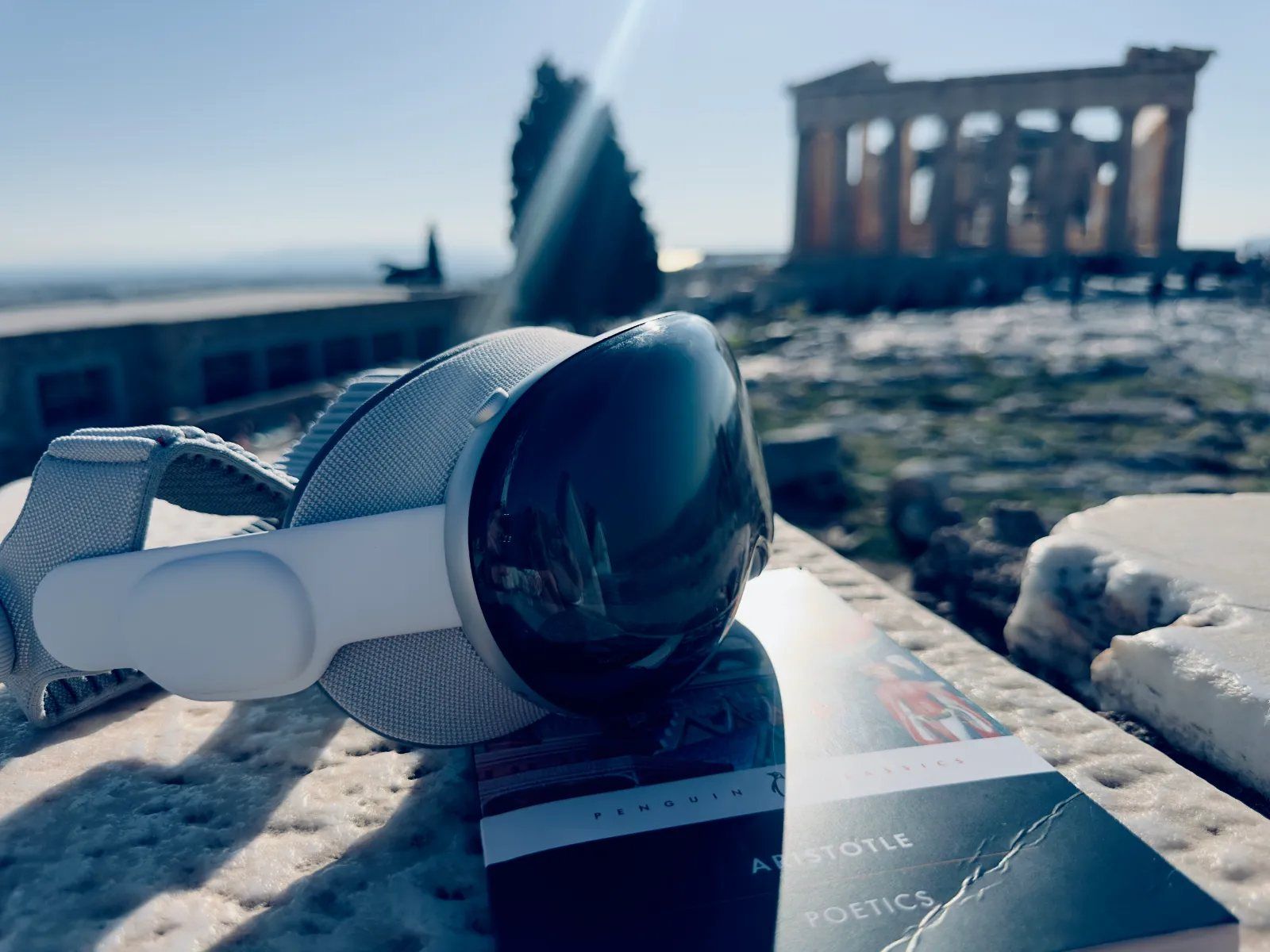
It all started on a walk along the Thessaloniki coast last October.
The idea had been there for more than a year, in conversations that kept returning to the same problem from different angles.
We had been building the platform first. A prototype for distributing immersive work, on the assumption that the technology would find its way into people’s homes and we would be ready when it did.
That assumption put our timeline in someone else’s hands. The pop-up cinema was the answer. If the audience isn’t coming, bring it to the audience. Into rooms they already walk into.
27–30 December 2025. Toss Gallery, on the first floor of Ladoze bar in Thessaloniki. Eight pods.
We had no idea what we were doing.
No one hands you a manual for an immersive cinema, because the format barely exists. So we built the one we had been imagining. Where the seats go. How someone is greeted. What they see first, how long they sit, what happens in the seconds after. Every one of those was decided from scratch, in a room, the week between Christmas and New Year.
Eight months later: 5,000+ screenings. 30+ setups. 233 submissions from filmmakers around the world. 250+ five-star reviews. A place in the curator network of the Cannes immersive market.
Thessaloniki first. Then Athens. Then Anafi. A small island, a long way from any cultural capital, and the place where Dimitris Papaioannou sat down in one of our pods.
After that, a tour across Greece: sixteen cities and islands, places that don’t usually get this kind of programming. We will finish August on another Aegean island. You’ll see.
Every age came. That broke our first assumption. Some cried. Some laughed out loud. Some refused to take it off. And plenty arrived certain they wouldn’t like it, agreeing to sit down mostly to satisfy whoever dragged them there. The distance between how they sit down and how they stand up is the shortest version of why we do this.
We were fully booked, quickly, and we could not handle it. Waiting times, queues, people standing in a room not knowing when their turn would come. Nothing off the shelf did what we needed, so we built our own software to manage it.
“But isn’t VR dead?”
We hear it in almost every first conversation with a venue.
It usually traces back to one experience someone had years ago. Low resolution, a demo with no story in it, ten minutes that felt like a product launch. That memory becomes a verdict on an entire medium.
Two things in response. The technology has moved, considerably. And most of what people encountered back then wasn’t curated by anyone who cared.
That’s the actual work. We review a great deal to programme a little, and we’re strict. About the work, and the twenty minutes wrapped around it. A remarkable piece shown badly is a bad experience. Curation and operation should come together, which is why we built our own tools rather than improvising each time.
It’s all about the experience.
Where things stand
Installations. Ongoing, and teaching us the most.
The platform. A working prototype in two directions: distribution into people’s homes, and an operating system for venues running location-based experiences.
The festival. In production, completing over the coming months.
Taking it off
Jaron Lanier, who coined the term virtual reality, has often made the point that the most valuable moment is the one after. When you take the headset off. Your senses come back refreshed, and the room you were sitting in the whole time looks newly strange, delicate, worth attention.
You take it off. The room is still there. You look at it properly. You pay attention. You become more curious.
AI will probably become better than humans at everything, apart from being human.
But what defines a human?
Unpredictability is one part of such a definition. The fact that we do not know what appears next in our consciousness. Unpredictability is our last resort against the algorithms.
Curiosity beats the algorithm.
In August, we’re taking it off as well.
What comes next will be announced at the beginning of September.
Until then: if you’re a creator, a distributor, an operator, a venue, or someone who reads this and recognises their own thinking in it, get in touch.
hello@poeticsvr.com
Instagram, Linkedin, FB, TikTok @poeticsvr.com
P.S. New Spotify playlist: Horizon Touch | Poetics Immersive