Byron Chrysovergis · · 3 min read
What Is Immersive Cinema?
A founder's take on what immersive cinema actually is, and why the world's best VR films still can't find an audience.
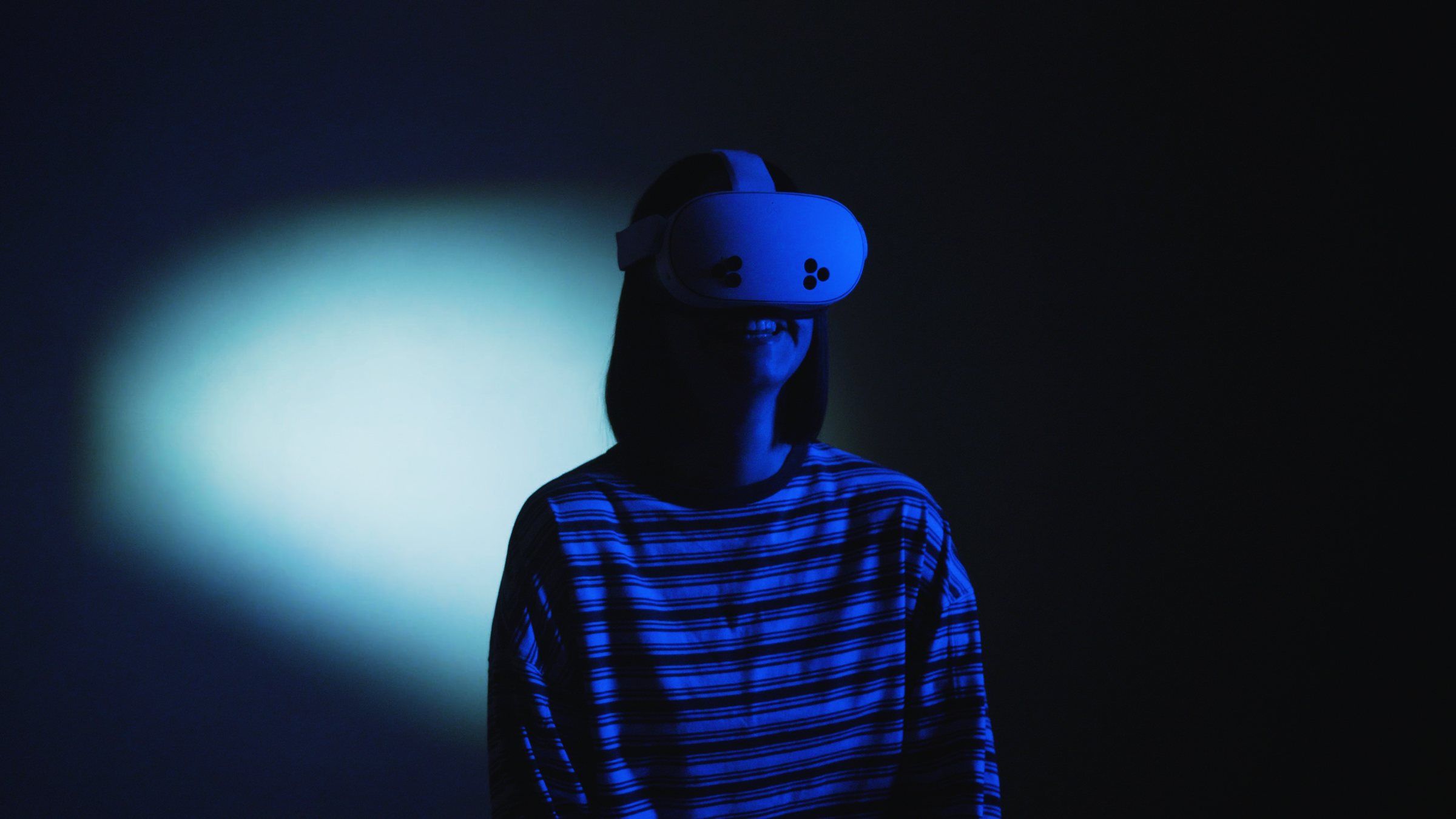
She sat down, put on the headset, and within ten seconds her hands were gripping the armrests. Not out of fear. She was standing on the edge of a cliff somewhere in Iceland, wind rushing past, and her body believed it. When the film ended and she took off the headset, she looked around the room as if seeing it for the first time. “Wait,” she said. “That was only seven minutes?”
We’ve seen this happen over 1000 times now. The details change (the title, the venue, the city) but the reaction is remarkably consistent.
Something shifts in people when they experience a story not on a screen, but inside it.
That shift is what immersive cinema is.
Not VR gaming. Not a tech demo.
It’s not a video game. No controllers, no score. It’s not a theme park ride, either. Immersive cinema is authored, cinematic storytelling experienced through a VR headset. The director still crafts the narrative, the pacing, the emotional arc, but instead of watching on a flat screen, you’re placed inside the story. You’re surrounded by it. The world of the film becomes your world, for a few minutes.
The best immersive films use this intimacy deliberately. A documentary that places you in a refugee camp doesn’t just show you what it looks like. It makes you feel what it’s like to be there. An animated piece can put you inside a painting, small enough to walk between brushstrokes. These are not gimmicks. They’re new narrative tools, and the filmmakers working with them are among the most inventive in the world right now.
Hiding in plain sight
Venice has had a dedicated immersive section for years. Sundance, Tribeca, Cannes, they all programme VR work. Apple launched its own immersive video format. Some of the most acclaimed works of the last five years were made for headsets.
And yet, almost nobody has seen them.
A film can win the Grand Jury Prize at Venice Immersive and still have no clear path to an audience beyond that festival week. Creators make extraordinary work, and then it essentially disappears. The art form is maturing fast. The distribution infrastructure hasn’t kept up.
That’s the problem we are trying to solve. That’s why we started Poetics.
What it actually feels like
If you’ve never tried it: you sit in a comfortable swivel chair. Someone from our team hands you a headset and noise-cancelling headphones, helps you adjust the fit. The film starts. And then you’re somewhere else.
No learning curve. No buttons. You just look around, and the story unfolds. Most screenings last between 7 and 25 minutes. When it’s over, the first thing most people do is smile. The second is try to describe what just happened. The third is ask when they can come back.
It’s cinema, but felt rather than watched.
Why now
Every few decades, a new format changes what cinema can be. Sound. Colour. Widescreen. Digital. Each time, it started as an experiment before it became the standard.
Immersive cinema is at that threshold. The headsets are comfortable, the content is world-class, and the audiences, when they get the chance, respond with enthusiasm we rarely see. Across all our screenings, we measure a 4.92/5 satisfaction score. Not because of the technology. Because of the stories.
The missing piece was never the art. It was always the access.
→ Bring it to your venue: how a Poetics cinema works